
Newaygo County Arrest Warrants Explained
An arrest warrant is a court order letting an officer take one specific person into custody on a specific accusation. It forms before any arrest. Two things must line up first. There has to be a proper complaint, and the facts have to show probable cause. The Newaygo County Prosecuting Attorney treats tickets and arrest warrants as two ways a criminal case can begin. That office must authorize a warrant before it is filed with the District Court. So no police department in the county can issue one on its own.
Newaygo County Prosecutor and Warrant Filing
The path runs through three offices, and it moves fast. An officer writes a report and a complaint. The prosecutor reviews it and authorizes the charge. Then a judge or magistrate decides whether the facts support the order under MCR 6.102. Probable cause can come from the complaint alone. It can also rest on a sworn affidavit, on sworn witness testimony, or on a mix of the three. A district magistrate in Newaygo County may issue both arrest and search warrants once a prosecutor or a municipal attorney authorizes them. That is how a weekend or after-hours warrant gets signed.
Inside a Newaygo County Arrest Warrant
The document is short. It still carries enough detail for an officer to act and for a Newaygo County court to identify the right person.
| Person named | A name and description of the person to be taken into custody. |
|---|---|
| Offense | The charge, plus the statute or ordinance the prosecutor cited and its felony or misdemeanor level. |
| Issuing court | The District Court or Circuit Court that signed the order, with the court code such as C27. |
| Complaint and affidavit | The document that established probable cause, which may be sealed from public view. |
| Authorization | The prosecutor's approval that allowed the filing. |
| Bond or release term | An amount or condition when the court sets one in advance. |
| Directive | Instructions to any peace officer to arrest and bring the person before the court. |
Newaygo County Summons Versus Arrest Warrant
Michigan leans toward the less disruptive option when it fits. Court rules say a court should ordinarily issue a summons rather than an arrest warrant. The two papers ask for different things. A summons tells a person to appear on a date. A warrant tells officers to bring the person in. In Newaygo County, a judge moves to the arrest warrant in certain situations. The case may be assaultive or involve domestic violence. There may be reason to doubt the person will appear, or public safety may be at risk, and the prosecutor can simply ask for one. That call is made on the record, so it is worth asking the clerk which document the Newaygo County file actually holds.
Serving Arrest Warrants in Newaygo County
The Newaygo County Sheriff serves process countywide and runs the jail. Four municipal departments cover the cities. The state police post and the county's Emergency Response Team back up the same work, and a warrant signed in White Cloud can be executed anywhere in Michigan.
Newaygo County Sheriff
Countywide law enforcement, service of process, and custody. The Emergency Response Team handles high-risk service when an agency requests it.
(231) 689-7303
City Police Departments
Fremont, Newaygo, White Cloud, and Grant officers serve and arrest within their authority and call on the county for support.
(231) 689-5288
Newaygo County Jail
Booking, custody, and bond logistics after an arrest. The jail reads the bond amount from the court order rather than setting one.
(231) 689-7024
The Sheriff's administrative support page posts the hours for records and service questions. Those are the times when a Newaygo County service request is easiest to place.
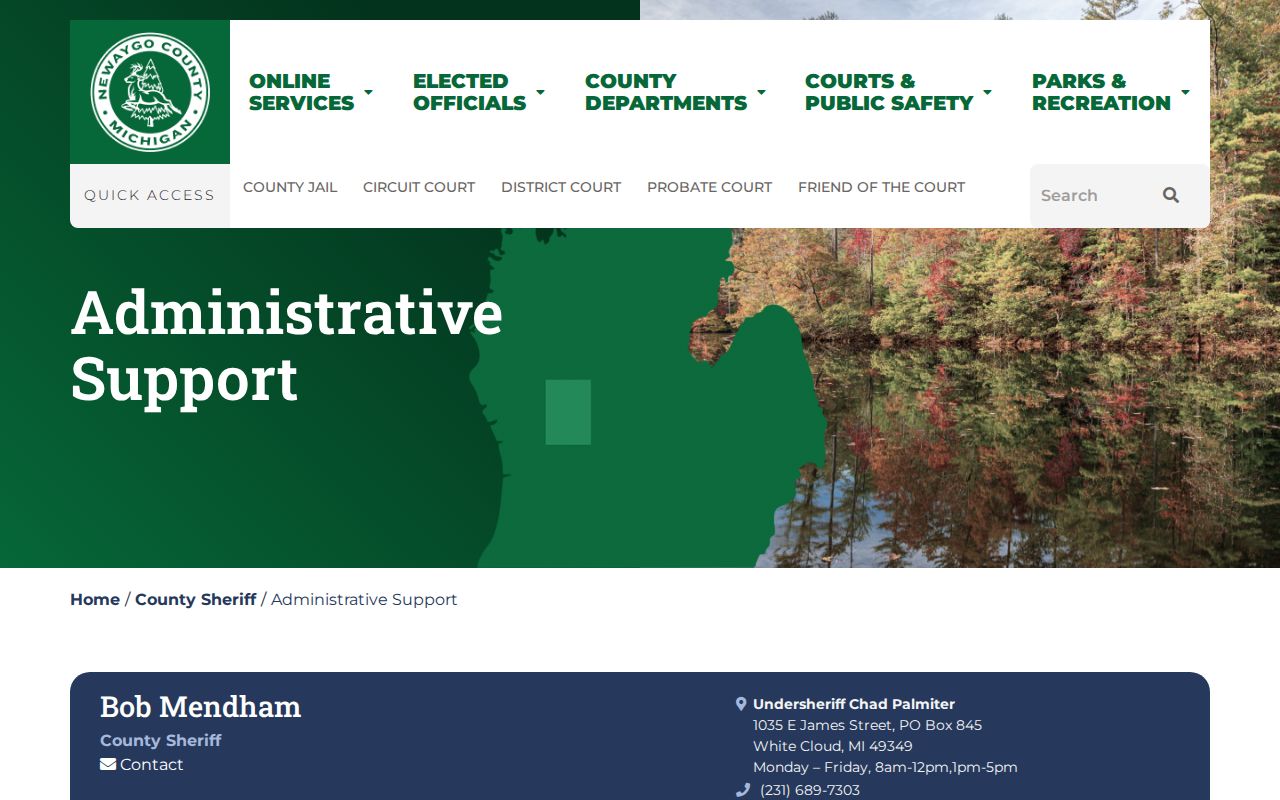
Sheriff administrative support keeps weekday hours. That is the best window to phone a Newaygo County records or service question.
Newaygo County Arrest Warrants and Search Warrants
People use the two words as if they meant one document. They do not, and the gap matters when you are hunting a record. An arrest warrant names a person and authorizes custody. A search warrant names a place, a vehicle, or an item, and it allows only a limited search for evidence. There is a secrecy difference too. Under MCL 780.651, the affidavit behind a search warrant stays nonpublic for 56 days, and a court order can seal it longer. A Newaygo County search warrant may therefore leave no public trace at all.
Note: A search warrant is not a warrant for a person, so a search of the case index is unlikely to locate one.
Comparing Arrest, Summons, and Bench Warrants
Three different documents can bring a person before a Newaygo County judge, and each one starts a different way.
| Document | What Starts It | What It Asks For |
|---|---|---|
| Arrest warrant | Complaint plus probable cause, authorized by the prosecutor | Custody and a first appearance before a judge |
| Summons | The same complaint, when a court appearance should suffice | A court date, with no custody |
| Bench warrant | A missed duty in a case already open | Custody to answer for the missed step |
From Newaygo County Warrant to Circuit Bindover
A felony case does not begin in the Circuit Court. It begins in the District Court with an arraignment, where the magistrate reads the charge and sets bail. From there the case goes to a probable cause conference and a preliminary examination. Only then can it be bound over to the Circuit Court. That sequence explains how one case shows up in two Newaygo County courthouses. Ask the District Court clerk first for anything recent. Go to the Circuit criminal line once a bindover has happened. A bench warrant from a missed District Court date stays a District Court matter.
If There's an Arrest Warrant for You
Act before an officer acts for you. An arrest warrant gets executed at a time and place someone else picks. In Newaygo County that usually means a traffic stop, a workplace visit, or a knock at the door. Walking in on your own terms is a very different experience.
Talk to a lawyer first. An attorney can confirm what the file contains, ask the court about a voluntary appearance under MCR 6.105, and explain the bond the judge is likely to set. Call the issuing court to ask which judge signed the order and what the next appearance would be. Do not try to negotiate the terms with the arresting agency.
If you choose to appear, get there during court hours with identification, and tell the clerk you are there on an open warrant. Ask for a written record of whatever follows. That could be a new date, a bond receipt, or a recall order. Then confirm that the Newaygo County sheriff and the state systems have both been updated.
Newaygo County and Federal Arrest Warrants
Federal warrants work differently from Newaygo County ones. The county belongs to the Southern Division of the Western District of Michigan, which runs its federal courthouse out of Grand Rapids. There, a federal judge or magistrate signs an arrest warrant after a complaint showing probable cause, or ties one to an indictment. Service falls to the U.S. Marshals Service, not the county sheriff. The federal Western District of Michigan publishes the division map placing Newaygo County in the Grand Rapids reporting area.
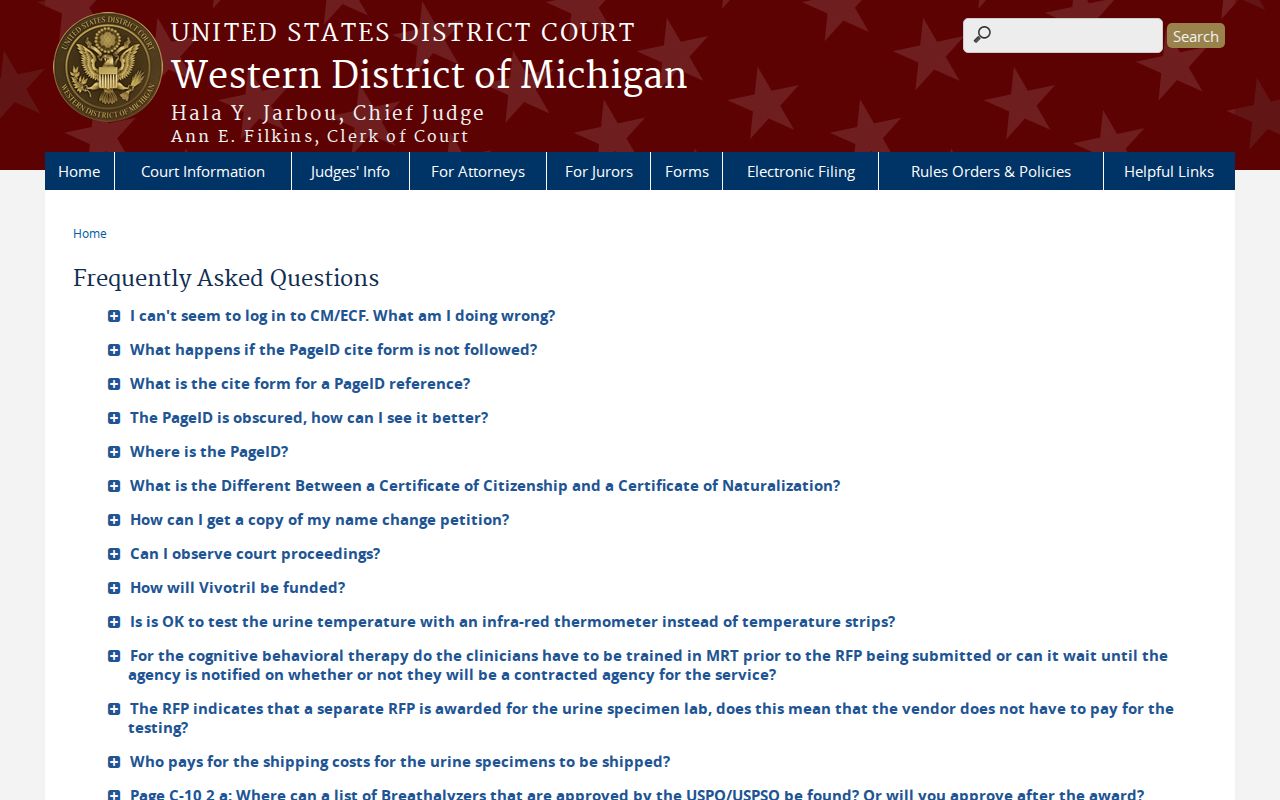
The county jail does hold federal detainees for the Western District of Michigan, and the Marshals office in Grand Rapids answers custody questions about them. For court papers, the federal court records system is the way in. It charges ten cents a page, caps most documents at three dollars, and waives quarterly bills of thirty dollars or less. One caution applies. A docket hit is not warrant confirmation, and a sealed federal warrant leaves no public entry at all.
Note: Federal and county warrants are separate systems, so clearing one has no effect on the other.
The federal court records system publishes its own fee policy for docket documents.
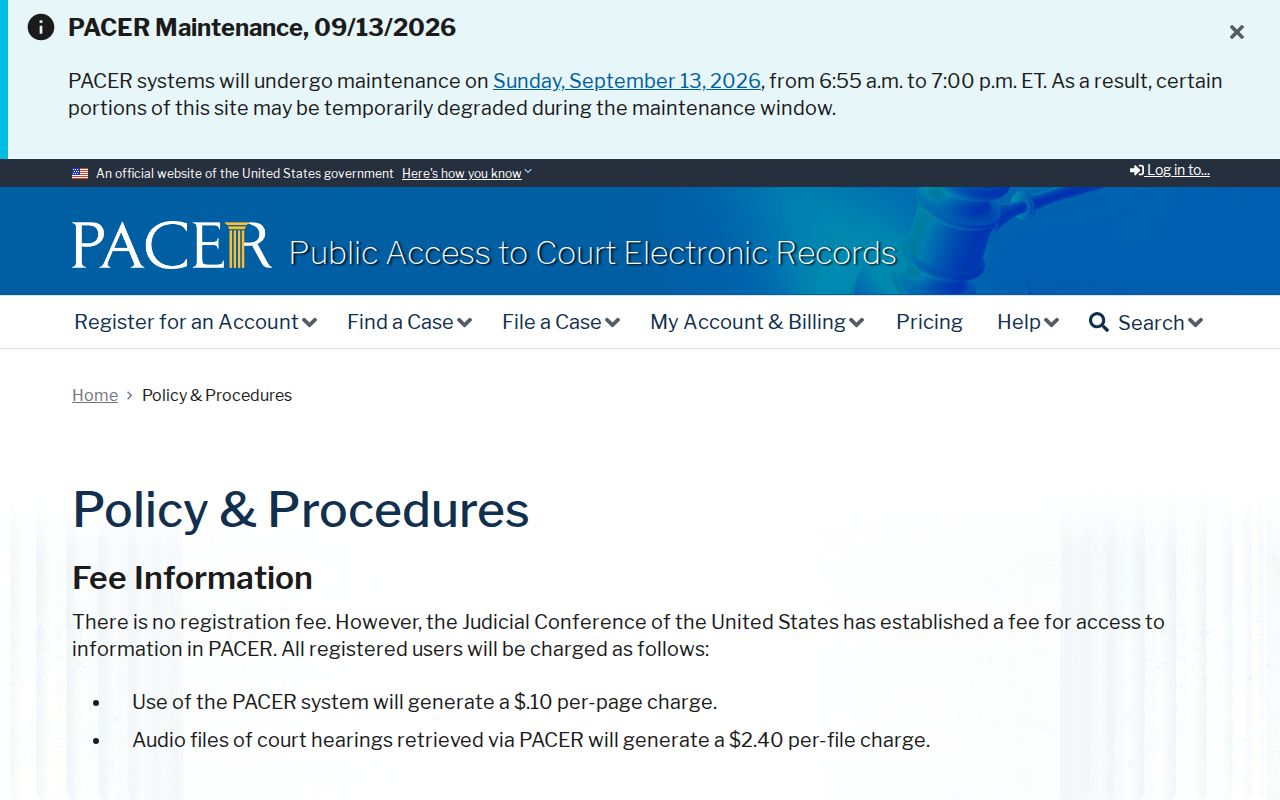
Know the fee schedule before you pull anything in Newaygo County. Even search result pages can trigger a charge.